Sunday, August 16, 2015

From Persecutor to Persecuted: Retired Chinese Policewoman Sends Criminal Complaint Against Former Dictator

Growing desperate that the Falun Gong practitioners still clung to their faith, Jiamusi labor camp authorities decided to try a psychological approach—Falun Gong books were issued to policemen, and they were ordered to read them and refute the teachings, part of the attempt to force practitioners to recant their faith.
Cui was given “Zhuan Falun,” Falun Gong’s main textbook. After reading it, “the unexpected happened,” wrote her 26-year-old son in a letter to the public prosecutor in Jiamusi.
Cui quit drinking, stopped playing mahjong—a Chinese tile game that is often used for gambling—cut down on vulgar language, and became healthier. “Zhuan Falun completely changed my mother’s life,” her son wrote.
Jenny Li, Epoch Times and Larry Ong, Epoch Times | August 2, 2015
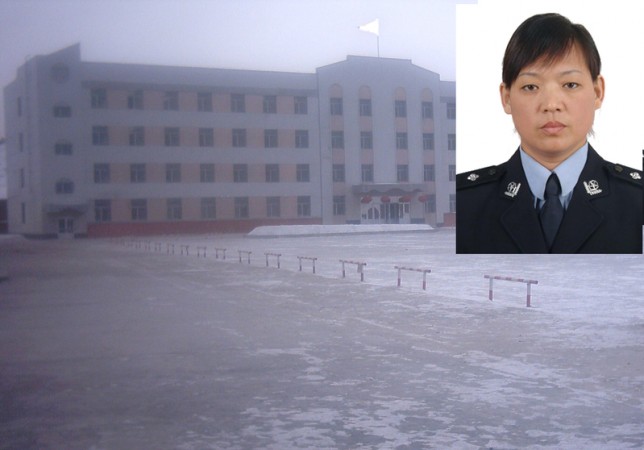
1503312203011002-644x450
Cui Huifang, a former policewoman and participant in the persecution of Falun Gong practitioners, was moved by the behavior of those she persecuted and became a practitioner herself. (Minghui.org)
When Cui Huifang spotted an elderly labor camp inmate perform slow-moving qigong exercises, she immediately flew into a rage and punched the septuagenarian with such force that she staggered backward and slammed into a metal bed frame.
How dare she do the exercises during my shift, thought Cui, then a policewoman at a Forced Isolation Rehabilitation Center in the northeastern Chinese city of Jiamusi in Heilongjiang Province.
Hurling insults and beating up practitioners of Falun Gong—a traditional Chinese spiritual discipline that involves gentle exercises and adherence to teachings of truthfulness, compassion, and forbearance—was a familiar routine for Cui after persecution of the practice started, at the behest of former Communist Party boss Jiang Zemin, in July 1999.
But before long, Cui had a change of heart. In fact, right after throwing that punch, she immediately had the thought: Please don’t be hurt.
This January, Cui, 52, retired as a policewoman. On Feb. 12, public security officers raided her home, abducted her, and have since kept her in a detention center in Jiamusi, in the far northeast part of China, bordering Siberia.
Near the end of July, Cui got her relatives to mail a criminal complaint on her behalf to the nation’s highest court and prosecuting body against Jiang Zemin. Over 100,000 complaints have been lodged against Jiang, an attempt to have the Chinese authorities live up to their own promises about the rule of law, to prosecute the former Party leader for crimes against humanity and genocide.
This graph shows the number of plaintiffs and criminal complaints made against former Communist Party leader Jiang Zemin since May, according to data from Falun Gong information website Minghui. (Frank Fang/Epoch Times)
“I was an active member and witness of the bloody persecution campaign against Falun Gong,” Cui wrote in her complaint. “I have also personally experienced the goodness of Falun Gong, and became a practitioner.
“Now, I am also a victim of the persecution.”

‘The Unexpected Happened’

In labor camps, Falun Gong practitioners are subjected to brainwashing, abuse, and torture in an attempt to get them to give up their faith. Hundreds of thousands have been persecuted in this manner at any given time, and over 3,800 have been persecuted to death, according to the official Falun Gong website Minghui. The numbers are thought to be much higher, but it is difficult to get independent information out of China given the Communist Party’s tight controls.
Cui Huifang initially thought nothing of persecuting Falun Gong practitioners. Years of routinely torturing labor camp prisoners as part of their “reformation” had numbed her to the act; some of her colleagues even enjoyed it.
But the behavior of Falun Gong practitioners started to move Cui. The practitioners not only showed no hatred to their torturers, they returned the brutal abuse by Cui and others with kindness.
“As time passed, I became more and more inclined toward the Falun Gong practitioners,” recalled Cui to a friend, who wrote it in a letter to the public prosecutor in Jiamusi.
Growing desperate that the Falun Gong practitioners still clung to their faith, Jiamusi labor camp authorities decided to try a psychological approach—Falun Gong books were issued to policemen, and they were ordered to read them and refute the teachings, part of the attempt to force practitioners to recant their faith.
Cui was given “Zhuan Falun,” Falun Gong’s main textbook. After reading it, “the unexpected happened,” wrote her 26-year-old son in a letter to the public prosecutor in Jiamusi.
Cui quit drinking, stopped playing mahjong—a Chinese tile game that is often used for gambling—cut down on vulgar language, and became healthier. “Zhuan Falun completely changed my mother’s life,” her son wrote.
Becoming a Falun Gong practitioner was a struggle for Cui. When reading “Zhuan Falun,” Cui felt that Falun Gong “is righteous and teaches people to be kind” and felt the “injustices” of the Communist Party’s slander of the practice. But then she immediately put down the book and thought, “How can I think like that; I’m a policewoman with a job and a family!”

Remarkable Story

Being a first-hand witness to the “harsh terror in China” eventually strengthened Cui’s resolution to practice Falun Gong.
A year before she retired, Cui decided to show support for Falun Gong practitioners who were tortured in Jiansanjiang prison in Heilongjiang. Then, local police beat up and detained the lawyers—Tang Jitian, Jiang Tianyong, Wang Cheng, and Zhang Junjie—who had sought to defend the practitioners.
After the Jiansanjiang case, Cui realized that she was being followed and monitored by the authorities. They made their move in February, arresting her on the charge of “holding state secrets and confidential documents.”
Beijing-based lawyer Li Xiongbin met with Cui, and told Minghui that the charge was “only a formality” and that the key issue behind her arrest was her remarkable story—a former policewoman who became a Falun Gong practitioner.
Cui Huifang “became a practitioner because of her experiences, and she’s telling people why she practiced and what the practice is,” said Li.
“This has a shocking effect on people.”
1305121921312100

Sunday, July 19, 2015

A Switch to Duke-NUS Graduate Medical School

July_10-23_24_lowres
 By Epoch Times Staff
After finishing junior college, Ms Tan Wen Qi didn’t take a straight path to becoming a doctor.
She went on to obtain her engineering degree at the National University of Singapore, graduating in 2011. But despite receiving a first-class honours in biomedical engineering, she realised what she really wanted was to work more closely with people.
“During my third year summer vacation, I worked in the Chronobiology and Sleep Laboratory at Duke-NUS, where we studied the effects of sleep-deprivation on health in young men. It was a refreshing and eye-opening experience for me, as I was studying the biology of healthy individuals first-hand, instead of working with test-tubes on a bench. I realised that I wanted to work more closely with people, doctors and patients, and to be able to observe and have a more direct impact on people’s health,” says Dr Tan.
After four years, she is one step closer to her dream. Recently, the 27-year-old graduated with a Doctor of Medicine (MD). She was one of 49 students to collect their MD degrees at this year’s Duke-NUS Graduate Medical School graduation ceremony, which also saw the school’s first batch of eight PhD holders graduate in integrated biology and medicine.
In the interview with Dr Tan, Epoch Times finds out the opportunities Duke-NUS Graduate Medical School offers as well as her insightful training.
She emphasises, “We are often told that medicine is an art, not a science, and that is incredibly true. Medicine is a lifelong journey of learning that doesn’t stop after medical school.”
The petite Dr Tan also shares with us her views regarding the illicit organ harvesting trade, particularly in China.

“I have met a few patients over the past few years who have gone to China for kidney transplants—but most people don’t know where China’s large supply of organs comes from,” she discloses.

What opportunities does Duke-NUS Graduate Medical School offer?
It offers the opportunity to study medicine, particularly for those who didn’t have the chance to pursue undergraduate medicine. My classmates come from a variety of backgrounds—science, engineering, even economics, art history, and anthropology. They’ve also shown that you don’t necessarily need a science background to do extremely well in medical school.
Duke-NUS also has a research year where we are engaged in a research project with a mentor. We can choose to do it in clinical or basic science. I really appreciated the experience and extensive support I received from my mentors, statisticians and others who were part of the school faculty. They were instrumental in exposing me to clinical research and the option of becoming a clinician scientist.
Is medicine a rewarding experience? Why?
It is a rewarding and extremely humbling experience. We are given the privilege of examining and treating patients, and we deal with something so important to them—their health and their lives. Many patients are truly inspiring with their strength in the face of adversity, especially the paediatric patients. Despite all the hardship they experience in their health and personal lives, they remain real troopers. I have learnt a great deal from them!
What are the moral ethics for doctors?
There are four basic principles:
1. Respect for autonomy: respecting the patients’ right to choose or refuse treatment
2. Beneficence: doing what is best for the patient
3. Non-maleficence: “do no harm” to the patient
4. Justice: fairness and equality in the distribution of health resources
Tell us about your training in local hospitals. Share with us your experiences, and some memorable lessons?
I had most of my training at Singapore General Hospital, one of Singapore’s busiest tertiary hospitals, and KK Women’s and Children’s Hospital. I was fortunate to have very good mentors at these hospitals who taught me a lot. The patients are also my teachers; without them, I would not have the medical knowledge and experience I know now.
One of my most memorable lessons was following an elderly patient for her follow-up appointment with her cardiologist. She patiently and amicably spent three hours in tests and waiting before she could see the doctor. It made me appreciate all the waiting that a patient has to go through for a 10-minute consultation. At the same time, I’ve also experienced first-hand how hectic the clinics are, where doctors are pressured to see so many patients in a limited time. Time-management and tolerance on both sides become very critical things to have!
What do you think is the most pressing issue in healthcare today?
With Singaporeans living longer, we are already facing a greying population and an increasing burden from chronic diseases like hypertension, diabetes, heart disease, stroke, and dementia. The vast majority of patients who are admitted to hospitals have at least one of these conditions, and these conditions more often than not require lifelong management. Our healthcare system is under pressure to cope with the influx of these patients.
One of our professors, A/Prof Lee Kheng Hock, recently wrote a comprehensive article for Today (“Reinventing Singapore’s GPs”, 12 June 2015) that succinctly highlights the problem and how we can improve our healthcare system to cope with the impending demands. General practitioners and especially allied health workers like nurses, physiotherapists, occupational therapists, pharmacists, and medical social workers are vital to caring for our ageing population in the community.
There have been reports of people going overseas for organ transplants, particularly to China. What are your thoughts?
It is unsurprising that people are going to China for organ transplants. The average waiting period for a kidney in Singapore is nine years. Conversely, the waiting period in China for organs is within weeks, and over 10,000 organs are transplanted per year. I have met a few patients over the past few years who have gone to China for kidney transplants.
But many don’t know where China’s large supply of organs comes from. Unfortunately, these organs are harvested from prisoners and prisoners of conscience, particularly Falun Gong practitioners, Uighur Muslims, Tibetans, and House Christians. These innocent people are detained for years in prisons across China, where they are tested and matched to recipients, and killed to fuel the organ trade.
The evidence from global investigations has been so serious that the United Nations Special Rapporteurs and UN Committee for Torture have repeatedly called attention to the matter, and governments in Europe, North America, and Asia have passed legislations against China’s organ harvesting practice.
If there is greater awareness of what is happening in China, I believe people will stop going there for organ transplants. It will discourage the organ harvesting trade, and save thousands of innocent lives in China.
For more information on organ harvesting in China, please visit http://stoporganharvesting.org

Saturday, July 18, 2015

Ride2Freedom: Children Small in Size, but Big in Heart (Photos)

IMG_3823
6Ordinary-kids-doing-Extra-Ordinary-190-2-674x450
Ride2Freedom riders get a moment to play among hollyhocks on June 26 in downtown Lawrence, Kan. (Cat Rooney/Epoch Times)

25 Ride2Freedom cyclists aim to rescue orphans in China

Friday, June 5, 2015

In spite of everything I still believe that people are really good at heart.

“In spite of everything I still believe that people are really good at heart.”  – Anne Frank

quotescover-JPG-79
The Jewish girl Anne Frank wrote her famous diary during the Nazi occupation of the Netherlands. Anne Frank was one of the most discussed Jewish victims of the Holocaust.